
 简体中文
简体中文 English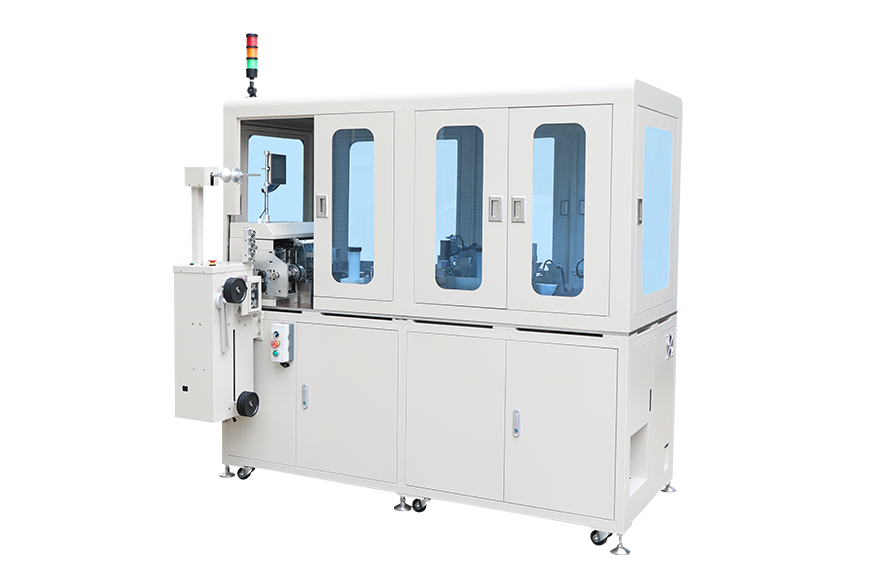
Full-Automatic Coaxial Cable Double-Head Tin-Plating Machine DM-C0214
Product Overview
The full-automatic coaxial cable double-head tin-plating machine DM-C0214 is an integrated automated device specifically designed for coaxial cable processing. It combines automatic wire feeding, cutting, stripping, and double-head tin-plating into a seamless workflow. Tailored to meet the needs of automatic tin-plating following cable cutting and stripping, this equipment integrates a precision coaxial stripper, a robotic system, and high-resolution vision technology. It can perform core processes such as automatic flux application and automatic tinning, while also featuring automatic sorting and collection of finished and defective products. This provides an efficient, precise automated solution for coaxial cable processing, widely adaptable to the production requirements of the consumer electronics and telecommunications equipment manufacturing industries.
Core Technologies and Workflow
The key advantage of this tin-plating machine lies in its multi-technology integration: the precision coaxial stripper handles the cutting and stripping of coaxial cables with exceptional accuracy, ensuring consistent dimensions; the robotic system manages cable transfer and positioning for tin-plating, enabling smooth transitions between processes; and high-resolution vision technology monitors tin-plating quality in real time, precisely identifying finished and defective parts to guarantee processing accuracy and stability.
The complete workflow is clear and highly efficient: first, the automatic wire-feeding module delivers the coaxial cable into the machine; then, the cutting module trims the cable to the specified length; next, the stripping module carefully removes the insulation layer; afterward, the robot transports the processed cable to the flux-application station for automated flux coating; it is then moved to the tinning station for double-head automatic tin-plating; finally, a vision inspection system verifies product quality, directing qualified items and rejects to their respective automatic collection units, thus achieving fully unmanned operation throughout the entire process.
Performance Advantages
1. Full-process automation: covering wire feeding, cutting, stripping, tin-plating, and sorting/collection, eliminating manual intervention at every stage, significantly boosting production efficiency and freeing up manpower in specialized roles.
2. Stable operation through structural optimization: the machine’s optimized design ensures robust overall stability, enabling it to handle prolonged continuous production cycles, reducing downtime for maintenance, and safeguarding production continuity.
3. Simple operation and maintenance: the user-friendly interface and straightforward operating procedures make the machine easy to use, while simplified maintenance features allow basic upkeep without requiring specialized technicians, lowering operational costs and training expenses.
4. Precise quality control: equipped with high-resolution vision technology, the machine accurately assesses tin-plating quality, automatically sorts finished and defective products, effectively minimizing human-error in inspections and improving overall product yield.
Core Value
For manufacturing enterprises, the core value of the full-automatic coaxial cable double-head tin-plating machine DM-C0214 manifests in several key areas: first, reduced labor costs—by replacing manual operations in specialized roles, the machine cuts labor input while avoiding efficiency fluctuations and quality inconsistencies caused by human error; second, increased production efficiency—its fully automated workflow outpaces manual processes in speed and consistency, effectively boosting capacity; third, assured quality stability—vision-based inspection and automated tin-plating ensure uniform processing accuracy for every cable, enhancing overall product quality and reducing defect rates; and finally, optimized operational costs—the machine’s stable performance and simple maintenance design minimize losses from equipment failures and lower maintenance expenditures.
Target Customer Base
This equipment primarily serves manufacturers in the consumer electronics sector—including producers of smartphones, tablets, and smart wearables—as well as companies in the telecommunications equipment industry, such as base station manufacturers, communication cable component makers, and telecom terminal device producers. It is also suitable for specialized suppliers engaged in coaxial cable processing, meeting these businesses’ needs for automated tin-plating of coaxial cables.
Application Scenarios
In the consumer electronics industry, the DM-C0214 can be used for processing internal RF coaxial cables in smartphones, tin-plating signal transmission cables in tablets, and automating the production of small coaxial cables for smart wearables, thereby ensuring reliable connectivity and superior signal transmission within electronic devices.
In the telecommunications equipment manufacturing sector, the machine supports processing coaxial cables for base stations, performing double-head tin-plating on communication cable assemblies, and automating the production of internal connection cables for telecom terminals, meeting stringent requirements for cable processing accuracy and quality while ensuring stable signal transmission.
Addressing Industry Pain Points
1. Solving the problem of low manual-operation efficiency: traditional coaxial cable tin-plating relies on manual execution of multiple steps, resulting in slow processing speeds and inability to sustain long-term continuous operations. The machine’s fully automated workflow dramatically increases processing efficiency, meeting the demands of large-scale production.
2. Tackling inconsistent quality caused by manual operations: manual tin-plating often leads to uneven tinning and inconsistent flux application, causing significant variations in product quality. Equipped with vision inspection and automated tin-plating systems, the machine ensures uniform processing accuracy for each cable, boosting product pass rates.
3. Alleviating labor shortages in specialized roles: coaxial cable tin-plating involves meticulous, repetitive tasks that are difficult to recruit for. The machine can fully replace manual operations, freeing up specialized personnel and easing staffing pressures.
4. Reducing maintenance complexity: some automated equipment features intricate structures that pose significant challenges for upkeep. This machine, with its optimized design and simplified operation and maintenance, lowers the barrier to entry and reduces associated costs for enterprises.
Frequently Asked Questions (FAQ)
Q1: What types of coaxial cables can the DM-C0214 handle?
A: Designed specifically for coaxial cable processing, the machine accommodates standard-specification coaxial cables used in consumer electronics and telecommunications equipment. Parameters can be adjusted according to different cable specifications, meeting diverse processing needs.
Q2: How accurate is the machine’s automatic sorting function?
A: Equipped with high-resolution vision technology, the machine precisely identifies finished and defective products, delivering high sorting accuracy and effectively reducing errors associated with manual inspection, thus ensuring product quality.
Q3: Is the machine difficult to operate? Does it require specialized personnel?
A: The machine features a user-friendly interface and streamlined operating procedures, making it accessible even without specialized technical expertise. With minimal training, operators can quickly become proficient, and maintenance is equally straightforward, lowering enterprise training and operational costs.
Q4: How long can the machine run continuously?
A: Thanks to its optimized structural design, the machine boasts strong operational stability and can adapt to extended continuous production schedules. Specific continuous operating durations can be tailored to meet enterprise production needs and maintenance schedules, ensuring uninterrupted production.